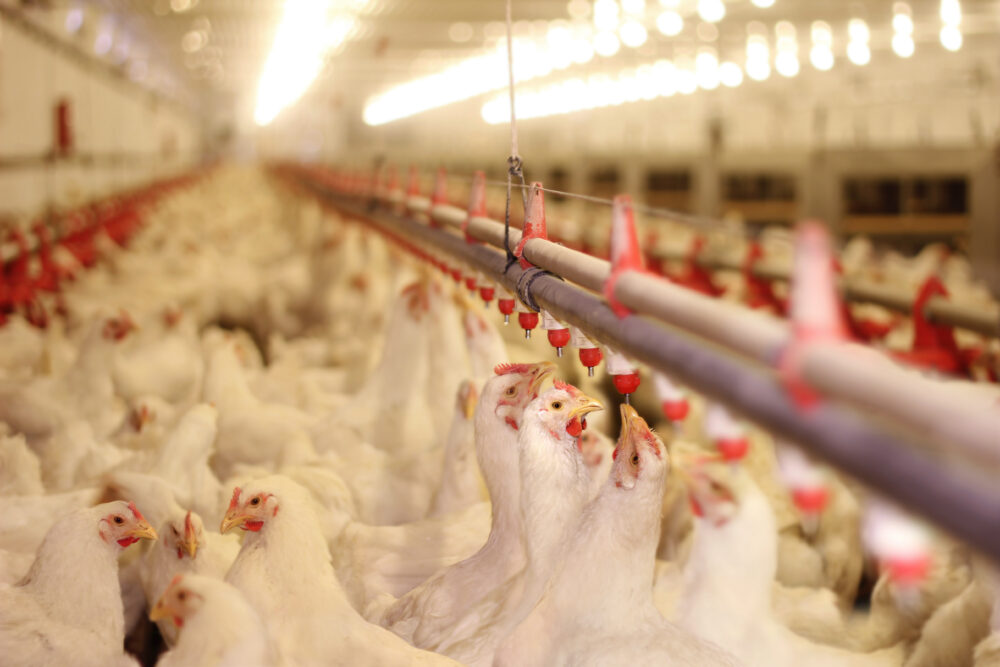
 © branex/Adobe Stock
 Together with the Humboldt Forum for Food and Agriculture and Wissenschafts- und Innovationszentrum Nachhaltige Geflügelwirtschaft, HFFA Research quantified and compared the societal benefits of intensive poultry meat production in Germany and the EU compared to extensive and organic alternatives.
As demand for animal protein rises, modern poultry production faces growing scrutiny for perceived environmental and social drawbacks. Despite its efficiency and productivity, intensive poultry farming is often labeled as “industrialized” and environmentally harmful. Policymakers and the public increasingly call for a transition to alternative production systems, yet the broader economic and ecological implications of such a shift remain unclear.
This study conducted a comparative economic and environmental analysis of three poultry production systems—intensive, extensive, and organic. It modeled the cost implications of transitioning to less intensive systems and evaluated the global consequences of reduced domestic production, including potential land use change and biodiversity impacts abroad.
Switching to extensive production would increase poultry production costs by 25–30%, while organic production would more than double these costs.
Higher costs would translate into increased consumer prices and reduced domestic output.
A drop in EU poultry production could shift demand to imports, likely leading to land conversion, higher CO2 emissions, and biodiversity loss in exporting countries.
From an economic welfare perspective, intensive poultry production offers greater societal value for the EU by supporting affordability, food security, and environmental sustainability on a global scale.