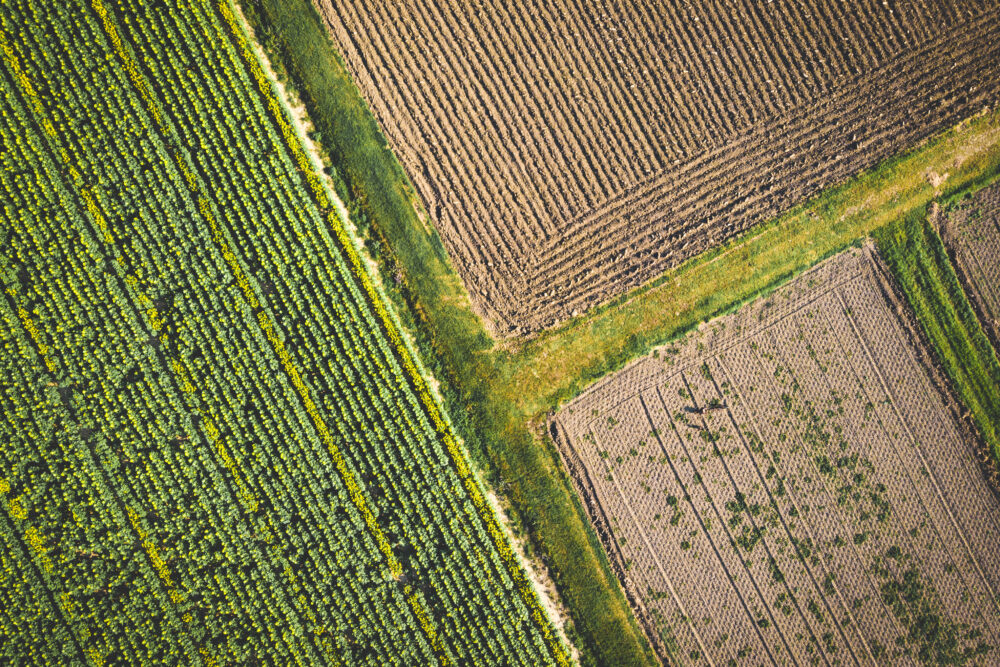
 © francescobertozzi/Adobe Stock
 This HFFA Research study evaluates the regional and global biodiversity impacts of conventional versus organic agriculture in Germany, focusing on land use efficiency, yield outcomes, and the broader environmental consequences of different farming practices.
As agriculture remains one of the main drivers of biodiversity loss globally, the debate around sustainable farming often centers on whether organic or conventional systems are more environmentally sound. While organic farming is widely perceived as more biodiversity-friendly, this study investigates whether that holds true when accounting for yield differences and international land-use spillovers.
The analysis compares biodiversity impacts of organic and conventional arable farming in Germany using eight ecological indicators. It assesses biodiversity losses per hectare and per unit of output, and models global land-use changes under various scenarios of organic production expansion.
Yield gap: Organic farming in Germany produces 51% lower yields on average across major crops.
Local biodiversity impact: Biodiversity reduction in organic farming is 67%, versus 86% in conventional systems.
Per-yield comparison: When adjusted for productivity, organic farming can result in up to 55% greater biodiversity losses per unit of output than intensive systems.
Global land use effects: Increasing organic farming to 20% in Germany would require an additional 815,000 hectares globally, primarily in countries with high biodiversity.
Policy message: Intensified agriculture in high-yielding regions like Germany can serve as a land-sparing strategy, balancing food security with biodiversity conservation.
The authors advocate for an evidence-based, depolarized dialogue on agricultural sustainability that recognizes both the strengths and limitations of all farming systems. A nuanced approach is needed to reconcile ecological preservation with the imperative to feed a growing global population.