
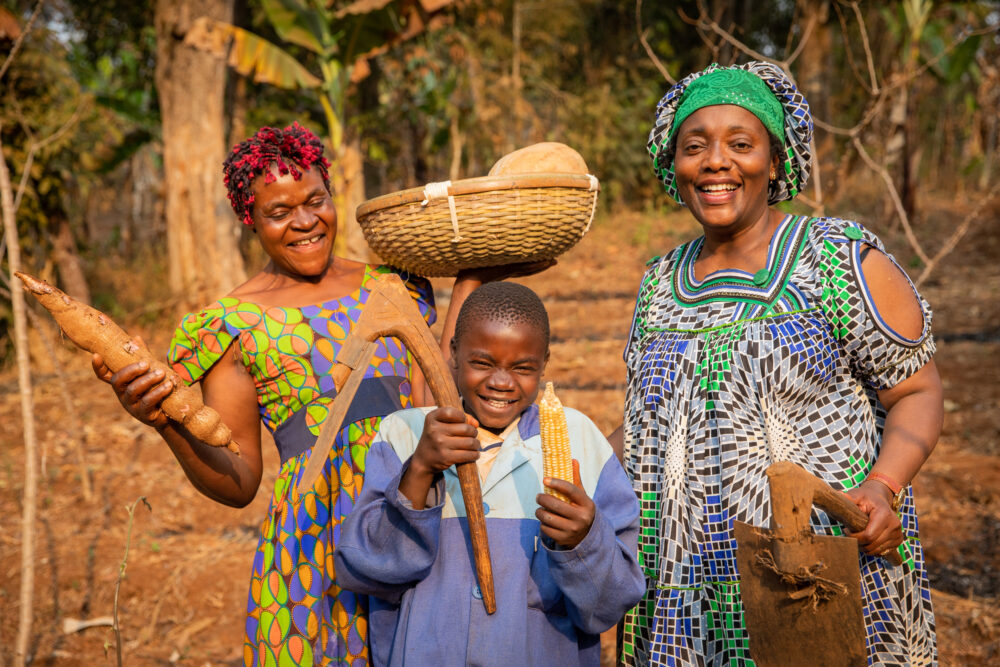
 © Media Lens King/Adobe Stock
On behalf of the German Cooperative and Raiffeisen Confederation (DGRV), and in cooperation with two external evaluators, HFFA Research evaluated the regional cooperative programme SUCOSA II in Eswatini, Mozambique and South Africa at its midpoint. The programme is funded by the German Federal Ministry for Economic Cooperation and Development (BMZ).
Cooperatives are essential drivers of inclusive economic development. In Eswatini, Mozambique, and South Africa, they provide marginalised communities with access to capital, markets, and productive resources – yet they continue to face significant challenges: unfavourable policy environments, weak governance structures, limited technology adoption, insufficient capital, and low participation of youth and women.
Therefore, in the three countries the DGRV implemented project Strengthening Cooperative Economic Cycles in Rural and Semi-Urban Areas in Southern Africa (SUCOSA II) supports cooperatives and member-based organisations across the agricultural, financial, IT, and service sectors. Since 2022, the project offers advisory services, training, advocacy, and consulting with a particular focus on governance, digitalisation, and inclusive cooperative models.
As the project prepares for potential adjustments in future funding, there is a growing need to identify the most impactful interventions and develop strategic recommendations for the current project period and beyond.
Our task was to assess the project against the six OECD-DAC criteria: relevance, coherence, effectiveness, efficiency, impact and sustainability. Therefore, the team collected data in all three countries, including in Gauteng, Western Cape and Limpopo, in Mbabane and Manzini, and in Maputo and Nampula. The methods were:
Alongside country-specific findings, the evaluation looked at cross-country patterns, the multi-level approach, the digital tools developed in Eswatini, and youth as a strategic target group. The results feed into concrete recommendations for the remaining project period and a potential SUCOSA III.