
 © Isabel Hackenberg
In collaboration with the International Potato Center (CIP) and under funding from GIZ, this project contributes to the SIMPATICA initiative by analysing how climate change affects potato agro-diversity and smallholder livelihoods in the Andean highlands.
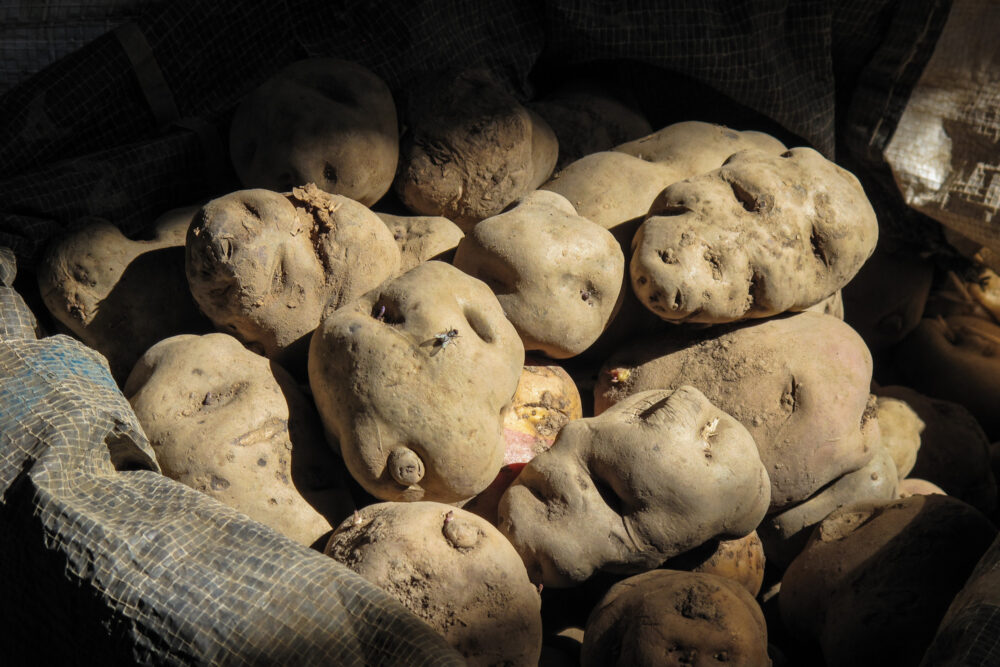
The Andes host one of the world’s richest centers of potato diversity, with traditional landraces cultivated for over 7,000 years across a complex mosaic of microclimates and altitudinal zones. In this region, smallholder farmers maintain diverse potato varieties as an in-situ conservation strategy, enhancing both food security and resilience to climate variability. However, the socio-economic drivers and barriers influencing these traditional practices under changing climatic conditions remain poorly understood.
HFFA Research supported the SIMPATICA project by advising on survey design and conducting quantitative analysis to evaluate how farmers manage potato diversity. Our contribution included:
Supporting the development of a comprehensive household survey to serve as a longitudinal baseline.
Designing an econometric model to assess the socio-economic and cultural incentives and constraints affecting the maintenance of potato diversity.
Developed a robust data collection framework to enable long-term monitoring of agrobiodiversity trends.
Identified key factors influencing farmers’ decisions to continue cultivating traditional potato varieties, including market access, cultural values, and risk mitigation needs.
An open access baseline data base was published as one of the outputs of this project.