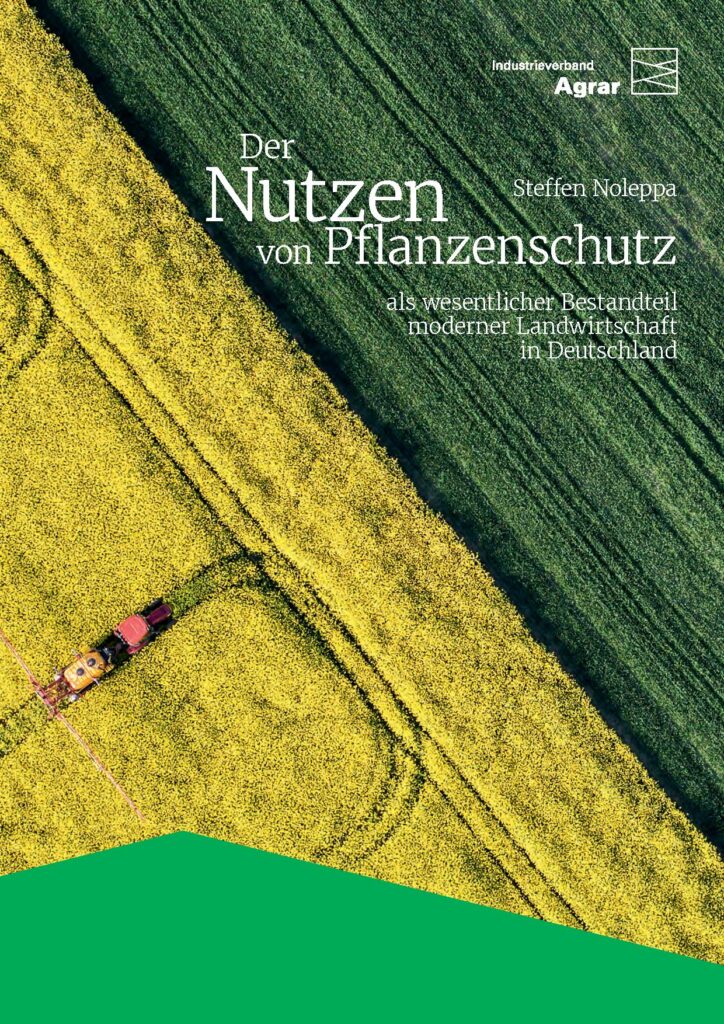
 © rsooll/Adobe Stock
 HFFA Research, in collaboration with the German Agricultural Industry Association (IVA), has produced an updated analysis quantifying the economic, environmental, and societal benefits of modern crop protection in Germany.
Crop protection—particularly the use of chemical plant protection products—is increasingly subject to public criticism and policy scrutiny. While concerns around safety and sustainability are valid, the role of these products in ensuring food security, environmental efficiency, and economic viability is often overlooked. This study seeks to rebalance the discussion with evidence-based insights.
Building on the original research, the updated HFFA Research Paper 02/2017 employs scientific analysis and modelling to assess the contribution of crop protection products to agricultural productivity, climate performance, and resource efficiency. The results have been translated into an accessible summary publication by IVA, supported with visual explanations for public and policy engagement.
Modern crop protection contributes significantly to securing crop yields, supporting farm incomes and food affordability.
Properly used, these tools reduce land-use pressure by maintaining high yields, which in turn helps protect biodiversity and natural ecosystems.
Crop protection enhances climate efficiency by increasing land productivity and reducing the need for energy-intensive agricultural expansion.
Public discourse on crop protection should incorporate scientific evidence to support balanced, sustainable agricultural policy.