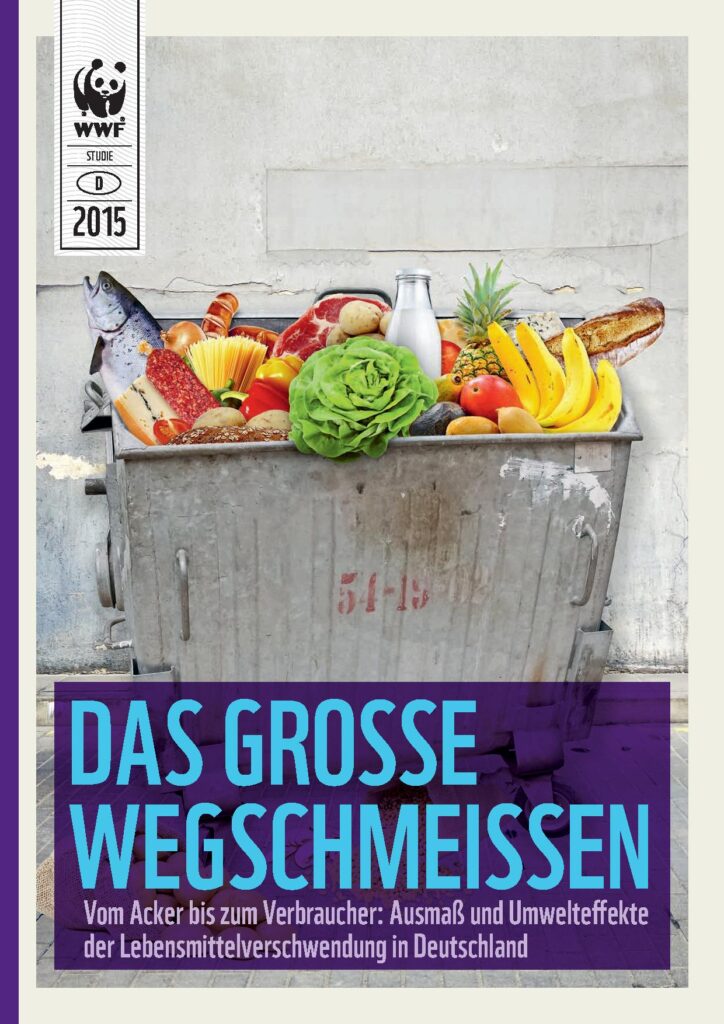
 © wernerimages/Adobe Stock
 Commissioned by WWF Germany and authored by Steffen Noleppa and Matti Cartsburg of HFFA Research, this study quantifies the scale of food waste in Germany and its associated environmental impacts, building on earlier WWF analyses and incorporating updated data and insights.
Food waste remains a significant issue globally, with far-reaching consequences for food security and environmental sustainability. In Germany, despite rising awareness and growing scientific engagement, substantial amounts of food continue to be wasted across the value chain. This study seeks to clarify the current extent of avoidable food losses and their environmental implications.
The analysis breaks down food waste across various stages of the supply chain, distinguishing between avoidable and unavoidable losses. It identifies major food groups most affected by waste and calculates the associated greenhouse gas emissions, particularly focusing on the climate footprint of preventable losses.
Nearly one-third of Germany’s food consumption—over 18 million tons annually—is wasted.
Approximately 10 million tons of this waste is avoidable, especially in cereals (~2 million tons), fruits, vegetables (~1.5 million tons each), potatoes, and dairy products (over 1 million tons each).
Avoidable food waste in Germany generates almost 22 million tons of CO₂-equivalent emissions—about one-third of the emissions from the entire agricultural sector.
Reducing food waste represents a critical opportunity for climate action and more efficient resource use, requiring coordinated efforts from households, the food industry, and policymakers.