 © Pink Badger/Adobe Stock
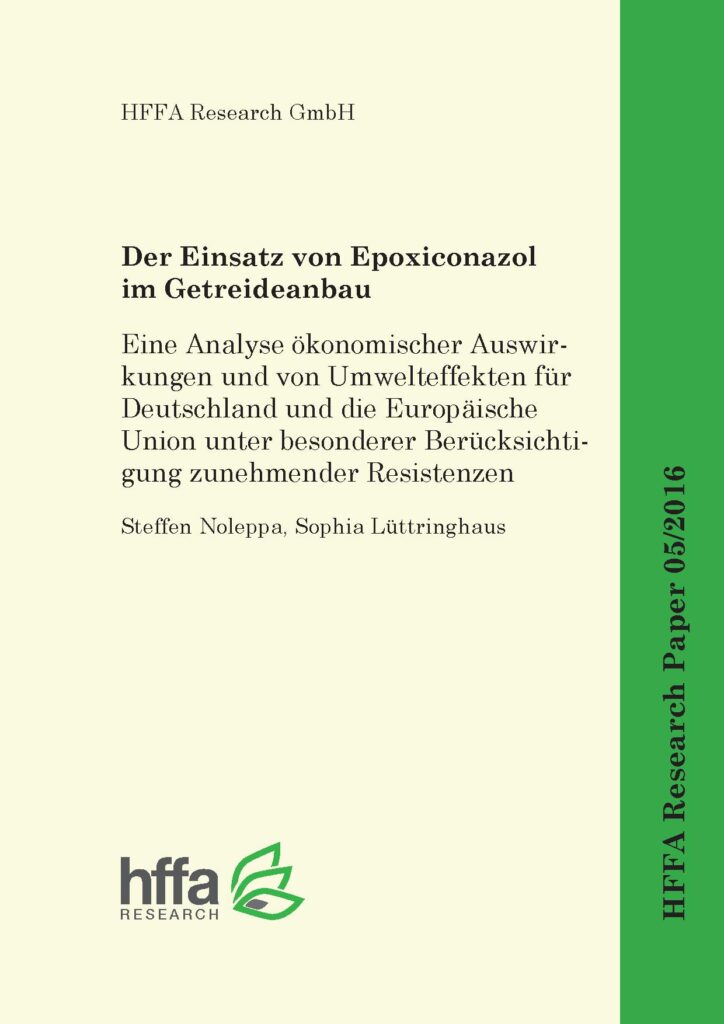
 Authored by Steffen Noleppa and Sophia Lüttringhaus for HFFA Research, this study evaluates the economic and environmental consequences of a potential ban on Epoxiconazole (EPX), a widely used fungicide active ingredient in German wheat and barley production.
As regulatory scrutiny increases on plant protection products, the non-renewal of EPX’s EU approval (due in April 2019) could have significant effects on crop yields, farmer income, environmental sustainability, and national GDP. EPX plays a vital role in controlling fungal diseases in key cereals, offering broad-spectrum protection not easily replicated by alternative fungicides.
The study compares productivity outcomes and resistance implications between EPX and other fungicides, calculating both short- and mid-term effects on yields, economic output, and environmental indicators, including greenhouse gas emissions.
Short-term productivity gains from EPX: +2.31% in wheat and +1.86% in barley.
EPX contributes to additional annual yields of 260,000 tons of wheat and 55,000 tons of barley in Germany.
GDP impact: Loss of EPX could reduce national output by approximately EUR 217 million annually.
Mid-term risk of resistance to alternative fungicides could lead to yield losses of 900,000 tons (wheat) and 242,000 tons (barley).
Environmental impact: Yield reductions following an EPX ban could result in more than 90 million tons of additional CO₂ emissions due to global land use change.
The study urges policymakers to weigh these significant economic and ecological consequences alongside potential risks, advocating for a comprehensive and balanced re-assessment of EPX’s regulatory status.