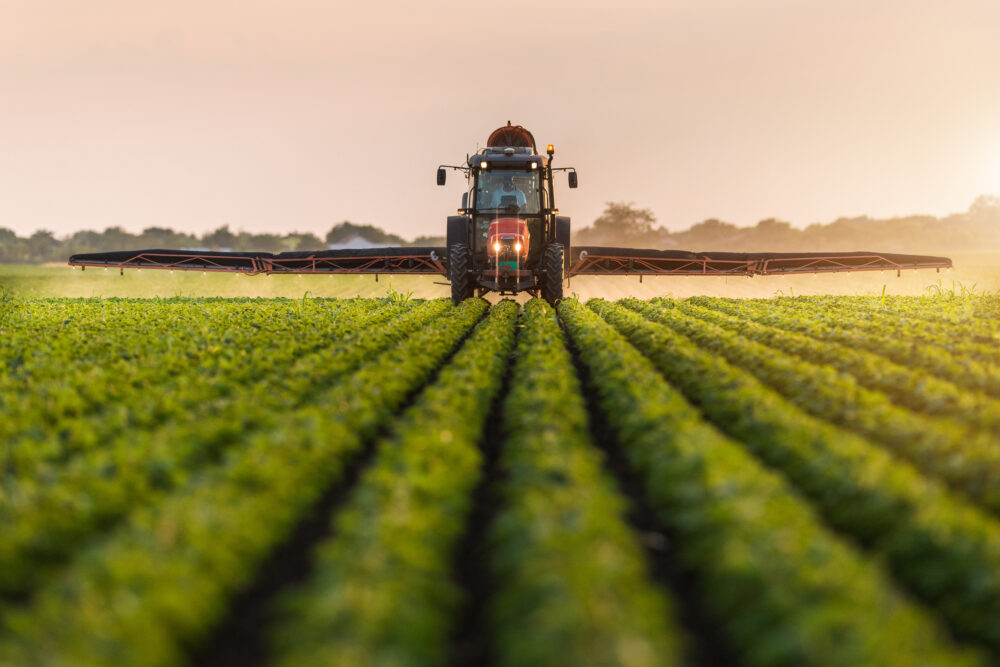
 © Dusan Kostic/Adobe Stock
 Authored by Steffen Noleppa and Matti Cartsburg for HFFA Research, this study analyzes the impacts of EU agricultural trade on global land use and assesses the region’s evolving self-sufficiency in food and feed production.
Global food demand continues to rise while available agricultural land faces growing constraints from urban expansion, climate stress, and degradation. The EU, as a major player in global agricultural markets, influences land use both domestically and abroad through its trade policies and production practices. Understanding these effects is essential for shaping sustainable agricultural policy.
The study quantifies the EU’s virtual land trade—the land required abroad to support EU imports—and examines self-sufficiency trends using grain unit equivalents. It also explores how agricultural productivity and trade patterns are evolving and what policy shifts may be needed to sustain future food security contributions.
Between 2012 and 2014, the EU was a net importer of 18 million hectares of virtual land annually.
Since 2007, virtual land imports have declined, reflecting improved productivity within the EU and globally.
EU self-sufficiency has modestly improved, currently standing at approximately 89% in grain unit terms.
Despite progress, the growth of agricultural productivity is at risk due to declining public support and restrictive policy debates around conventional farming.
Continued investment in agricultural research and innovation is critical for sustaining EU productivity and supporting global food security.