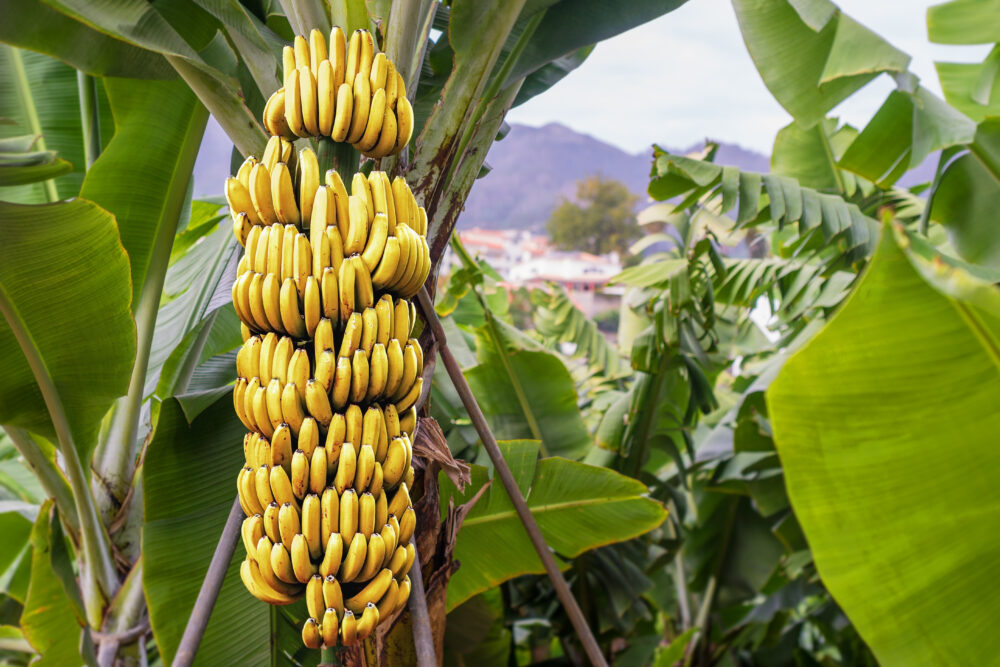
 © matousekfoto/Adobe Stock
 Commissioned by GIZ in collaboration with the Action Alliance for Sustainable Bananas (ABNB), this study evaluates the current and future impacts of climate change on key banana-producing regions in Latin America and outlines region-specific adaptation strategies.
Banana exports are vital to the livelihoods of rural populations in Latin America and remain a staple in European markets. However, current production practices often carry significant environmental costs, and climate change now threatens the long-term viability of banana cultivation in key regions. Addressing these risks is essential to safeguard both local incomes and the global banana supply chain.
HFFA Research is analyzing historical and projected climate impacts on banana yields in the regions of Antioquia and Magdalena (Colombia), El Oro (Ecuador), Mao and Azua (Dominican Republic), and Heredia (Costa Rica). The study integrates:
Historical yield and climate trend analysis over the past 30 years
Future climate projections and their estimated impact on yields and market prices through 2050 and 2070
Differentiated impact assessments by production type (e.g., smallholder vs. large-scale; organic vs. conventional)
Evaluation of ecosystem and biodiversity implications
In collaboration with ABNB and under the framework of BMZ-financed cooperation, the study also offers actionable guidance tailored to each region’s context, addressing both mitigation and adaptation measures for producers and policymakers.
In this project, stakeholders were equipped with data-driven insights and localized recommendations to strengthen the resilience of banana production systems. By identifying vulnerable areas and producer groups, the study contributes to informed policy decisions aimed at ensuring the sustainability of banana farming under changing climate conditions.